Listen to the Excerpt From Verdis Rigoletto. What Does This Song Reveal About the Dukes Character?
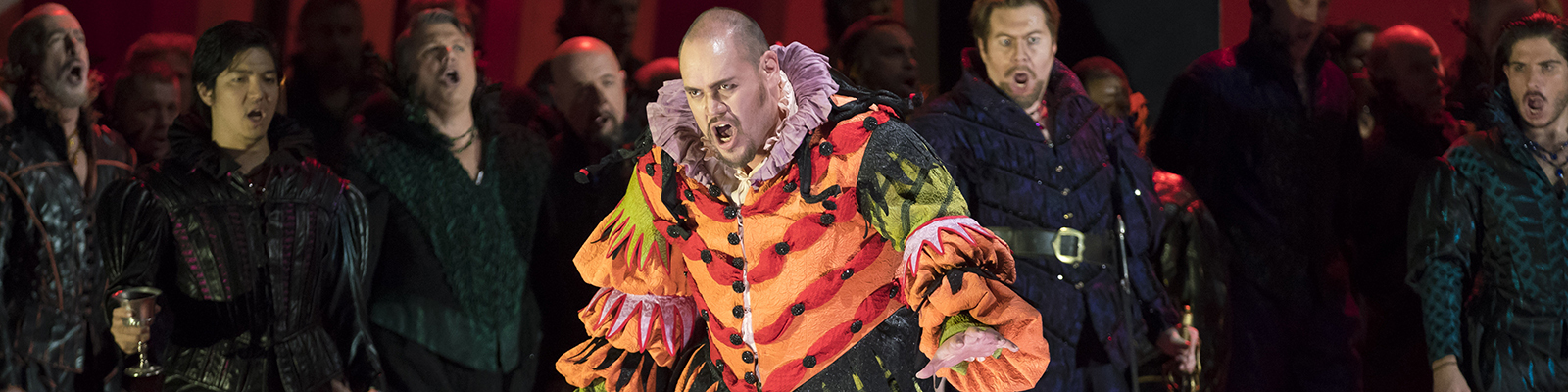
Rigoletto
Welcome to Lyric'south learning resources!
This is your all-access pass to the world of opera and musical theater. Curl down to access the following resources to assist you learn more.
Overview
Musical Highlights
Historical and Cultural Timeline
Composer and Librettist Biographies
Overview
This GoogleSlides presentation covers essential information your students need to know nearly the opera.
Musical highlights
Human activity 1: Scene 2 "Pari Siamo" (We are the same)
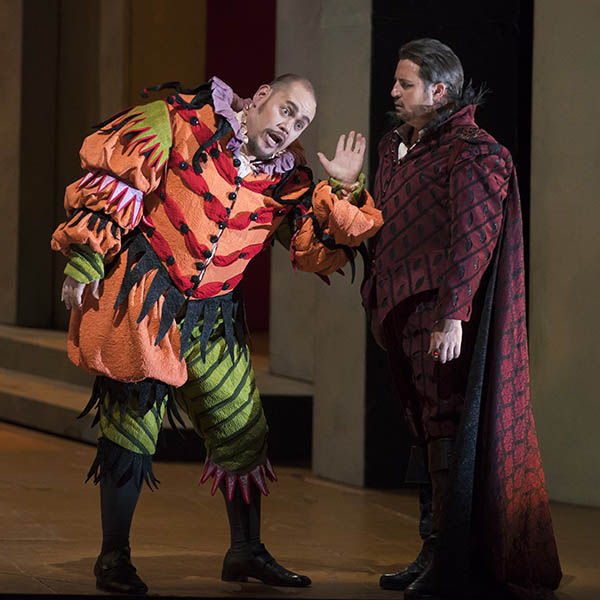
Sung by Rigoletto
This aria takes place in the second scene of the opera. Rigoletto is on his mode home from work and happens to run into Sparafucile, who offers his services as an assassin. He declines, only notes that they are like– Sparafucile cuts men down with a knife, Rigoletto cuts men down with his words.
Things to listen for:
- The aria begins in with Rigoletto singing alone. The orchestra arrives with a big chord on the word "pugnale," which means dagger. It creates a musical "stab."
- In this aria, the orchestra reacts to Rigoletto's words. He sings and the orchestra responds.
- Every bit Rigoletto's emotions intensify, his melody and the orchestral responses brainstorm at college notes with each new argument.
Deed 1: Scene 2 "Figlia!" "Mio padre!" (Daughter! My father!)
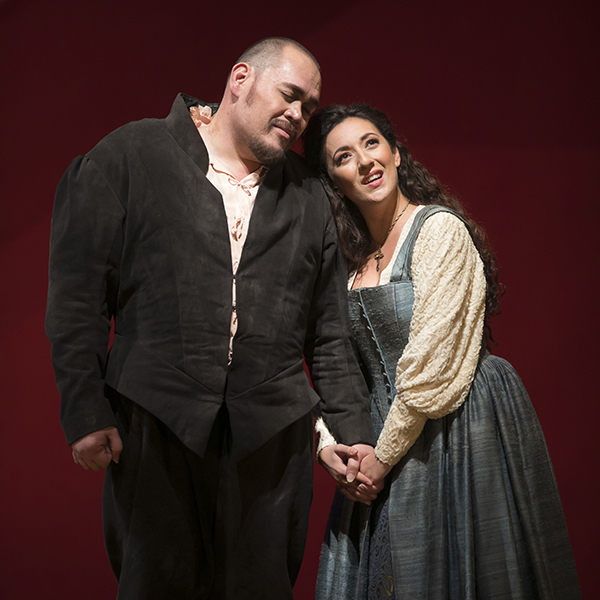
Sung by Rigoletto and Gilda
This duet immediately follows "Pari siamo." In it, we see a different side of Rigoletto. The opera opens with Rigoletto making fun of the crowd at the home of the Knuckles, which he admits is cruel. Once the door opens to his dwelling, we encounter a warm and cheerful Rigoletto who loves his daughter and she clearly loves him, too.
Things to listen for:
- Compare this duet with "Pari siamo." The previous aria was in a minor fundamental which indicated Rigoletto's seriousness. This duet is much faster and in a bright, major key.
- Many duets feature two melodic ideas (often a melody and a countermelody). Instead of that, Verdi takes a unmarried melodic line and shares it between begetter and daughter. When Rigoletto finishes, Gilda picks up where he concluded. Musically this demonstrates the close relationship between the characters.
Deed i: Scene ii "Gualtier Maldè!...Caro nome"
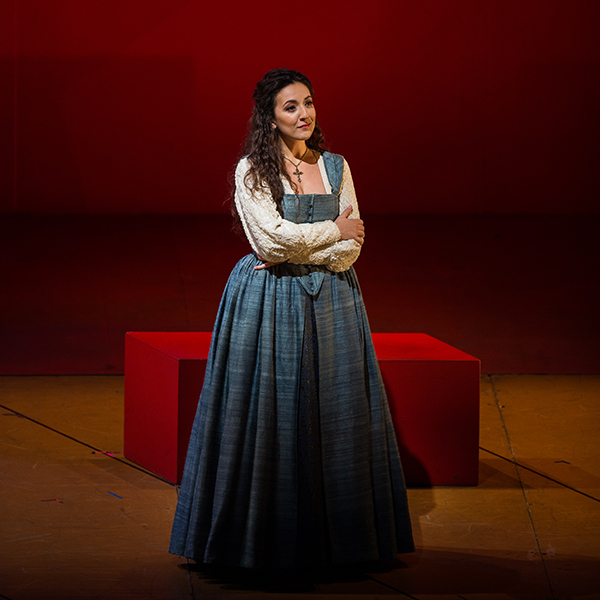
Sung by Gilda
The Knuckles has disguised himself as a townsperson to get close to Gilda. His fake name is Gualtier Maldè (in English, Walter Maldè). Gilda has never interacted with a human being before, other than her father. Gilda has never spent time with a man before, other than her father. She is infatuated. This aria is an expression of her giddy teenage love.
Things to listen for:
- The aria opens with Gilda listlessly staying the proper noun of her newfound love. As she sings, the flute is playing a series of notes upward, in a harp-similar manner. This orchestration creates an ethereal experience, which makes sense, considering Gilda has her "head in the clouds."
- Subsequently the "ethereal" introduction, the music changes. The orchestra is lighter and the overall feeling of the aria becomes trip the light fantastic toe-like.
- As Gilda sings, there are some birdlike responses in the violins.
Act 3: "La donna e mobile" (Adult female is fickle)
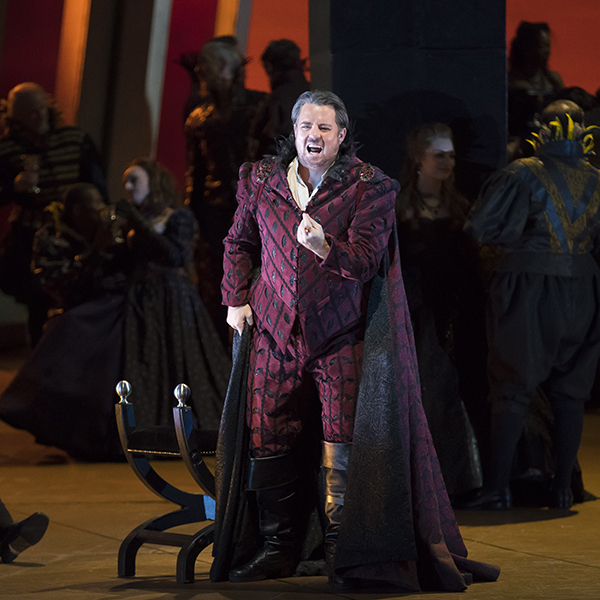
Sung by the Duke of Mantua
This is probably the most famous aria in all of opera (and no doubt the catchiest). The Knuckles is not a nice man. This aria highlights his lack of respect for women. He essentially says that women aren't very smart or reliable. (Lyric disagrees with the Knuckles's opinion completely.) Things to heed for:
- The aria is in triple meter and has a very traditional "oom pah pah" accompaniment. This style is popularly used for drinking songs, similar to German polkas.
- The melody is catchy considering of its simplicity and repetition. There are no big leaps or fast notes in this aria. Starting with the first statement: "La donna e mobile" and "qual piu ma vento" are very similar, and so are "muta d'acennto" and "eastward di pensiero." Basically, using pop music terminology, Verdi knew how to write a "hook."
Act 3: "Bella figlia dell'amore" (Beautiful daughter of dearest)
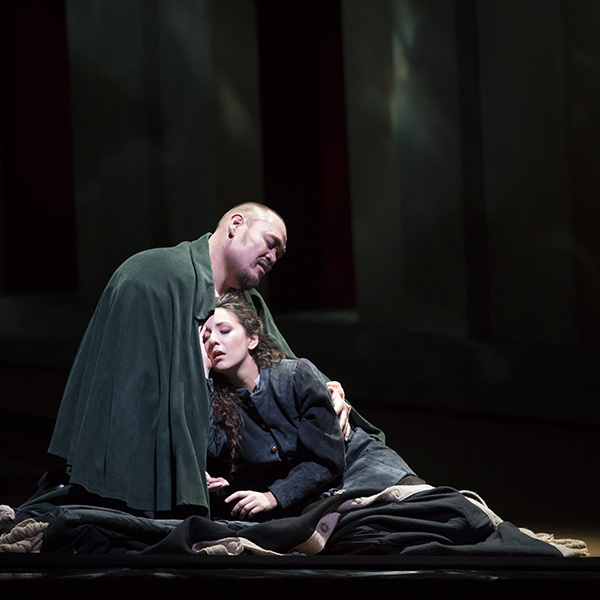
Sung by the Knuckles, Maddalena, Gilda, and Rigoletto
This quartet is some other famous opera moment. The Duke and Maddalena are conversing within the home of Sparafucile. Gilda and Rigoletto are outside watching this conversation through a window. The Duke is using his charms to seduce Maddalena, who is not impressed by his flattery. Gilda is heartbroken that her beloved "Gualtier" has betrayed her. Rigoletto is reassured about his plot for revenge.
Things to listen for:
- Listen for the musical differences in the pairs at the beginning. Gilda and Rigoletto are singing phrases that use longer notes and have a more than solemn tone. The Duke and Maddalena sing many notes without any seriousness.
- Maddalena laughs at the Knuckles singing "ah ah!" At the same fourth dimension, Gilda sings her heartache in short, clipped notes that sound equally if she is stunned by the situation—like she is catching her breath.
- Most the end of the excerpt, the Knuckles and Maddalena sing a long note on the give-and-take "Si" ("Yeah") while Gilda repeatedly sings "No, no, no…". The Duke and Maddalena are having fun, while Gilda is astounded by the infidelity of her dearest "Gualtier."
MacNeil, Grist, Gedda, di Stasio; Theatre dell'Opera, Roma, cond. Molinari-Pradelli. (EMI)
Music for Rigoletto provided past through generous organisation with Warner Classics, Official Pedagogy and Promotion Music Provider for Lyric Opera of Chicago.
Historical and cultural timeline
Learn more nigh this opera and events in the world at the time it was written.
Composer and librettist
Click to learn more about each artist!
Swipe to view more slides
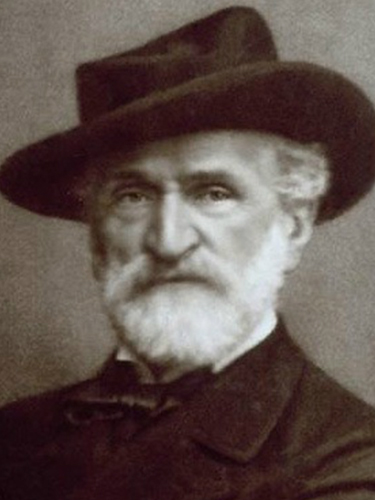
Giuseppe Verdi
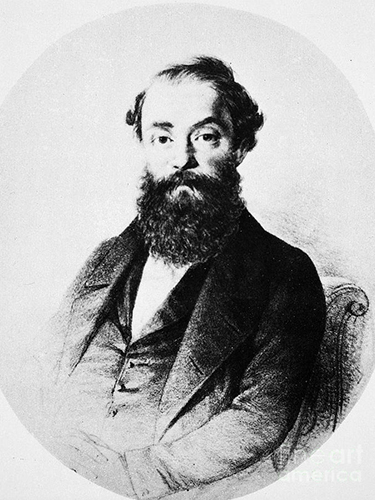
Francesco Maria Piave
Photos: Todd Rosenberg, Lyric Opera of Chicago
Back to top
Source: https://www.lyricopera.org/learn-engage/learning-resources/rigoletto/
0 Response to "Listen to the Excerpt From Verdis Rigoletto. What Does This Song Reveal About the Dukes Character?"
Post a Comment